

Can you plug a generator into a wall outlet?
Updated 2026-11-01 · BestGenerator team
We may earn a commission if you buy through our links, at no extra cost to you. As an Amazon Associate I earn from qualifying purchases.
Short answer: No. Never plug a generator into a wall outlet, dryer outlet or any home circuit with a cord that has a plug on both ends. That is called backfeeding: it can send power out onto the utility lines and injure or kill line workers, and it can overload your house wiring and start a fire. The safe ways are to plug appliances straight into the generator, or have a licensed electrician install a transfer switch or interlock kit.
Picks for this page
Westinghouse iGen2550DFc
Dual-fuel generator
1,900 running W · dual fuel · CO shut-off
Check price on AmazonWestinghouse iGen4000DFc
Dual-fuel generator
3,300 running W · dual fuel · CO shut-off
Check price on AmazonJackery Explorer 1000 v2
Power station (battery)
1,070 Wh · 1,500 W
Check price on AmazonWhat "backfeeding" means
Backfeeding is feeding power into your house wiring from the wrong end. The usual version: someone runs a cord with a male plug on each end from the generator into a wall outlet or dryer outlet, hoping to light up the whole house.
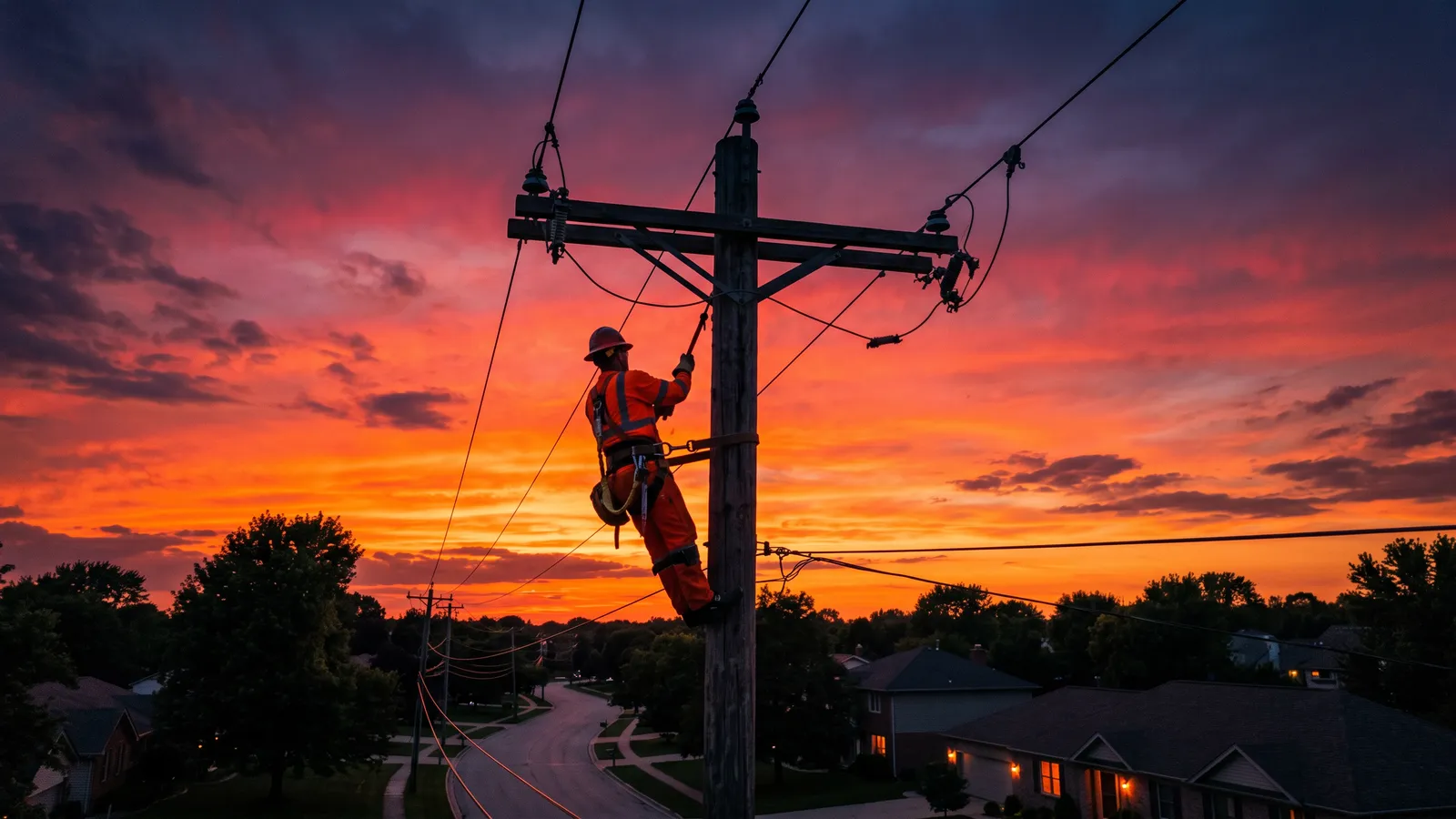
Your house is connected to the utility lines. Power fed backwards through your wiring can travel through the service transformer and onto the lines outside. Generac's safety page puts it this way: never plug a generator directly into your home's wiring, because it can send electricity back through the utility lines and injure or kill line workers.
Linemen working to restore your street think those wires are dead. That is why this one is not a "your house, your risk" question.
Why it's dangerous for you, too
- Fire. A normal wall circuit is protected by a breaker sized for that wire. A backfeed cord can push power into several outlets on a circuit at once, with no way for the breaker to see the true load. Wiring can overheat inside the walls.
- Live prongs. A cord with a plug on both ends has exposed live prongs at one end the moment the generator runs.
- Shock and damage. When the grid comes back on while the generator is connected, both sources meet. That can destroy the generator and your appliances.
- Neighbors. A shared transformer can send your generator's power to the houses next to you.
Switching off the main breaker first does not turn a hack into a safe setup. It only helps if the breaker is turned off every time and nothing else is wrong, and that is exactly what a proper interlock or transfer switch makes foolproof.
Three safe ways to power your home
| Method | What it is | Who installs it |
|---|---|---|
| Plug straight into the generator | Run heavy-duty outdoor extension cords from the generator to each appliance. Nothing touches the house wiring. | You |
| Transfer switch | A small panel wired to chosen circuits. It physically cannot connect the generator and the utility at once. | Licensed electrician |
| Interlock kit | A plate on your main panel that blocks the main breaker and generator breaker from being on together. | Licensed electrician |
Generac says a transfer switch installed by a qualified electrician is the only safe way to connect a portable generator to your home's electrical system. Ready.gov's own advice for the plug-in route is to connect appliances to the generator with heavy-duty extension cords.
For how the two installed options compare, see interlock kit vs transfer switch. For the full hookup, see how to connect a generator to your house.
Does this apply to a power station too?
Yes. A battery power station has no exhaust, but its AC output can push power into house wiring exactly like a generator can. The same rule applies: plug devices into the station directly, never into a wall outlet to feed a circuit. Many stations are safe to use indoors for the devices you plug into them: see portable power station vs generator.
What about the "generator inlet" box?
An inlet box mounted on the outside wall is not the same thing as a backfeed cord. It is safe only when it is wired to a transfer switch or an interlocked breaker by an electrician. An inlet wired straight to a breaker with no interlock is the same hazard in a nicer box.
What we'd buy
Choose the setup first, then the gear.
- If you want to run a few things directly: a quiet inverter generator with a CO shut-off, plus heavy-duty outdoor cords. See the models below.
- If you want circuits powered in the house: a transfer switch or interlock kit, installed by an electrician. Champion 201193 manual transfer switch is one listed unit, with its inlet box and cord. Buy one that matches your panel and your generator's outlet, and let your electrician confirm it before you buy.
- Cords: heavy-duty outdoor generator extension cord with all three prongs, rated for the watts of the load.
- Alarms: battery CO alarms, shown below.
Never run it inside to reach an outlet
The cord problem often leads to a second mistake: moving the generator near the house or into the garage so the cord reaches. Keep it outdoors, at least 20 feet from windows, doors and attached garages, as Ready.gov says. CPSC says carbon monoxide can kill within minutes, often before people notice symptoms. See generator carbon monoxide safety.
What to look for
- A transfer switch or interlock kit installed by a licensed electrician, with a permit where required
- A generator with the outlet your appliances need (and a 240 V outlet only if the switch or inlet needs it)
- Heavy-duty, outdoor-rated extension cords with all three prongs
- A CO shut-off feature on the generator
- Battery or battery-backup CO alarms on every level of your home
Models to consider
Westinghouse iGen2550DFc
Dual-fuel generator
- Power:
- 1,900 running / 2,550 starting W
- Fuel:
- Gas or propane (1,700 W on propane)
- CO shut-off:
- Yes
- CARB (California):
- No
Westinghouse iGen4000DFc
Dual-fuel generator
- Power:
- 3,300 running / 4,000 starting W
- Fuel:
- Gas or propane (2,970 W on propane)
- CO shut-off:
- Yes
- CARB (California):
- No
Jackery Explorer 1000 v2
Power station (battery)
- Capacity:
- 1,070 Wh
- Inverter:
- 1,500 W (surge 3,000 W)
- Fuel:
- None — battery
- Battery:
- LiFePO4
- CARB (California):
- Not needed (no engine)
CO alarms to consider
Every alarm listed here is UL 2034 listed, per its maker. Put one on every level of your home and outside sleeping areas, and follow its manual for placement.
Kidde C3010
- Type:
- Carbon monoxide only
- Power:
- Sealed battery (no battery changes) · 10-year life (maker's figure)
- Digital display:
- No
- Listed to:
- UL 2034 (US CO alarm standard)
First Alert CO5-B10D
- Type:
- Carbon monoxide only
- Power:
- Sealed battery (no battery changes) · 10-year life (maker's figure)
- Digital display:
- Yes (shows CO level)
- Listed to:
- UL 2034 (US CO alarm standard)
Kidde KN-COB-DP2
- Type:
- Carbon monoxide only
- Power:
- Plugs into a wall outlet, with battery backup · 10-year life (maker's figure)
- Digital display:
- No
- Listed to:
- UL 2034 (US CO alarm standard)
We don't test units ourselves; figures come from manufacturer spec sheets and the sources linked. How we research.
Sources
- Generac: Portable generator safety (never plug a generator directly into your home's wiring; transfer switch is the only safe way; opened for this page)
- Ready.gov: Power outages (connect appliances with heavy-duty extension cords, 20 feet, CO detectors; opened for this page)
- CPSC: Warns of generator, carbon monoxide and fire hazards ahead of hurricane season (May 27, 2026; alarms outside sleeping areas, indoors-never rule; opened for this page)
- OSHA: Using portable generators safely, fact sheet (backfeed can energize wiring for great distances; cited on our CO page, not re-opened for this page)
- Champion 201193 50A manual transfer switch (UL 1008, pre-wired, with inlet box and cord)