

Can you leave a generator running overnight?
Updated 2026-11-01 · BestGenerator team
We may earn a commission if you buy through our links, at no extra cost to you. As an Amazon Associate I earn from qualifying purchases.
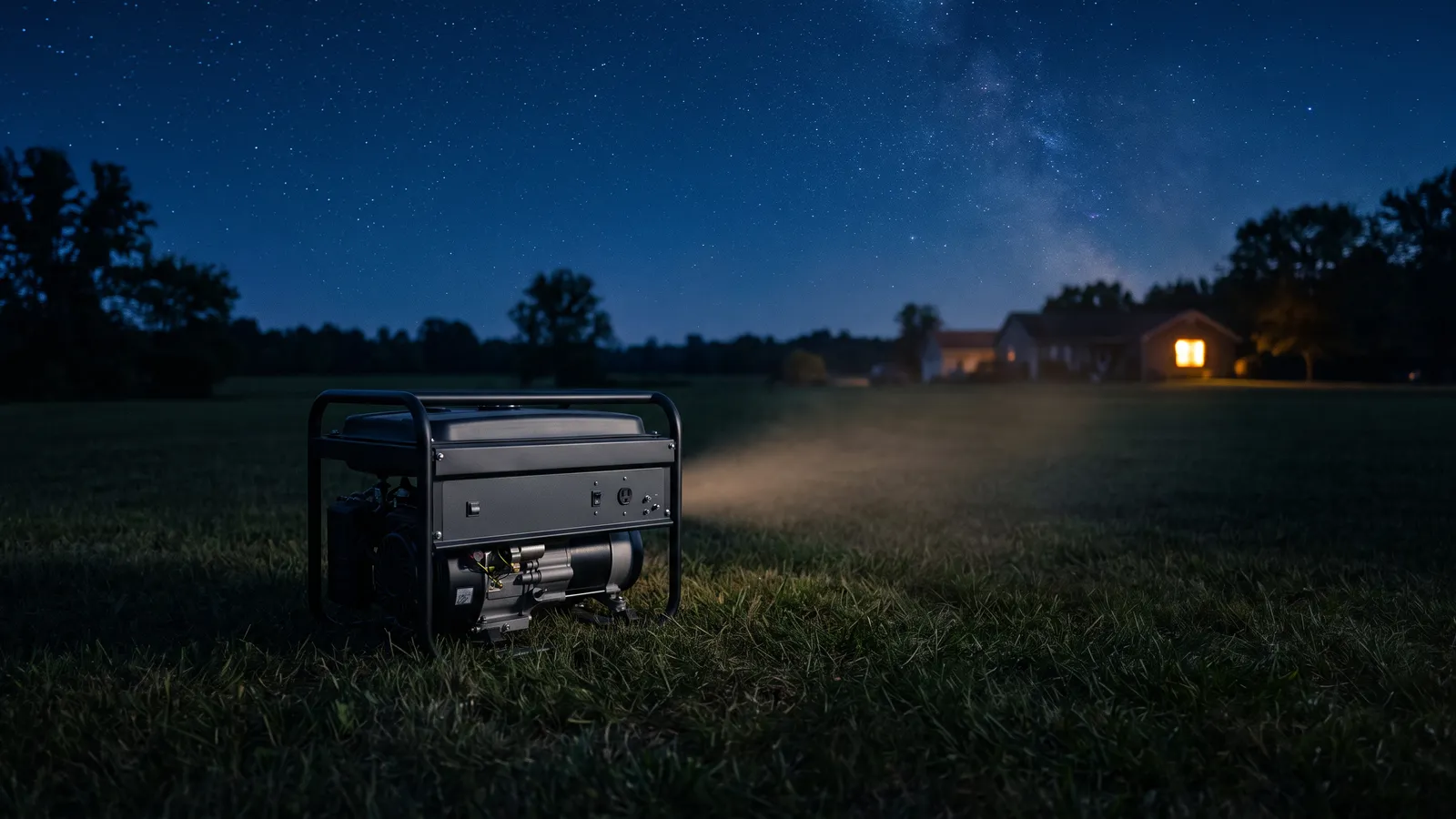
Short answer: Yes, a portable generator can run overnight if it is outdoors, at least 20 feet from the house with the exhaust pointed away, and you have working battery CO alarms outside the bedrooms. Never run it in a garage, shed or other enclosed space, and never refuel it while it is running or hot. If you can't meet those conditions, don't sleep with it running.
Picks for this page
Westinghouse iGen2550DFc
Dual-fuel generator
1,900 running W · dual fuel · CO shut-off
Check price on AmazonWestinghouse iGen4000DFc
Dual-fuel generator
3,300 running W · dual fuel · CO shut-off
Check price on AmazonWEN DF480iX
Dual-fuel generator
4,000 running W · dual fuel · CO shut-off
Check price on AmazonThe short version
Running a generator all night is normal during a long outage. The engine can do it. What matters is where it sits, whether you will be warned if something goes wrong, and whether it can run until morning on the fuel it has.
The danger overnight is carbon monoxide. You are asleep, so you won't notice early symptoms. CPSC says CO "can kill within minutes, often before victims recognize symptoms."
Overnight checklist
- Outdoors only. CPSC: never use a portable generator inside homes, garages, basements, crawlspaces, sheds or other enclosed areas. See why a garage is never OK.
- 20+ feet away. Ready.gov says at least 20 feet from windows, doors and attached garages, and CPSC adds the exhaust should point away from windows, doors and vents. See how far a generator should be from the house.
- CO alarms outside every sleeping area. CPSC advises battery-operated or battery-backup alarms on every level and outside sleeping areas, and testing them monthly. Interconnected alarms are best, since when one sounds they all do.
- Enough fuel to reach morning. Check your model's hours at the load you will run. Our 5 gallons of gas guide and the propane vs gas run time guide show how load changes runtime. A generator that runs dry at 3 a.m. tempts you to refuel in the dark.
- Refuel only when it is off and cool. Honda: "Do not refuel during operation. Allow the engine to cool if it has been in operation." Ready.gov: fuel spilled on hot engine parts can ignite. Generac says to refuel only after shutting down and giving it time to cool.
- Keep it dry and uncovered by anything that touches the exhaust. In wet weather see running a generator in the rain.
- Run only what you need. A lighter load burns less fuel and runs quieter.
If you can't do all of these, switch it off and use a battery power station for the essentials.
Do generators need a rest?
The sources we opened don't give a universal "hours per day" limit. Makers differ, and your owner's manual is the answer for your model: it covers oil checks, run-time between checks and when to stop. In practice, long outage running means checking oil before you start each night and keeping loads well under the rated watts.
Noise and neighbors
A running generator at night is loud, and some places have quiet hours. Inverter models are quieter than open-frame ones, and the maker's dB number usually applies at a stated distance and load. Moving it farther from the house helps both noise and CO.
Theft
A generator left outside overnight is a target. Chain it to something solid, outdoors and 20+ feet from the house, rather than moving it closer.
A safer option for small loads
If all you need overnight is a phone, a CPAP, or a router, a battery power station has no exhaust and can sit by the bed. See power station for CPAP all night and portable power station vs generator.
What we'd buy
- A quiet inverter generator with a long run time: pick one with a CO shut-off and a tank that lasts the night at the load you plan to run. The models below publish their own run times.
- Battery CO alarms: one outside each sleeping area, alarms below.
- Outdoor-rated cord: heavy-duty outdoor generator extension cord long enough to reach without moving the generator closer.
- A fuel can: an approved gas can with spout so you can refill in daylight, after it has cooled.
Signs of CO poisoning, and what to do
Headache, dizziness, nausea, weakness, sleepiness or confusion can be CO, and it can feel like the flu. If you feel these with a generator running, or an alarm sounds, get everyone outside into fresh air, call 911 from outside, and don't go back in to shut the generator off. CPSC: never ignore an alarm; get outside immediately, then call 911.
Run it outdoors only, 20+ feet from the house: generator carbon monoxide safety.
What to look for
- A generator with a CO shut-off feature
- A fuel tank or propane supply sized for the whole night, so you never refuel in the dark
- Battery or battery-backup CO alarms outside every sleeping area
- An open spot 20+ feet from the house, windows and doors
- Lower noise (an inverter model) if neighbors are close
Models to consider
Westinghouse iGen2550DFc
Dual-fuel generator
- Power:
- 1,900 running / 2,550 starting W
- Fuel:
- Gas or propane (1,700 W on propane)
- CO shut-off:
- Yes
- CARB (California):
- No
Westinghouse iGen4000DFc
Dual-fuel generator
- Power:
- 3,300 running / 4,000 starting W
- Fuel:
- Gas or propane (2,970 W on propane)
- CO shut-off:
- Yes
- CARB (California):
- No
WEN DF480iX
Dual-fuel generator
- Power:
- 4,000 running / 4,800 starting W
- Fuel:
- Gas or propane (3,600 W on propane)
- CO shut-off:
- Yes
- Noise:
- 62 dB (at 25% load; distance not stated)
- CARB (California):
- No
CO alarms to consider
Every alarm listed here is UL 2034 listed, per its maker. Put one on every level of your home and outside sleeping areas, and follow its manual for placement.
Kidde C3010
- Type:
- Carbon monoxide only
- Power:
- Sealed battery (no battery changes) · 10-year life (maker's figure)
- Digital display:
- No
- Listed to:
- UL 2034 (US CO alarm standard)
First Alert CO5-B10D
- Type:
- Carbon monoxide only
- Power:
- Sealed battery (no battery changes) · 10-year life (maker's figure)
- Digital display:
- Yes (shows CO level)
- Listed to:
- UL 2034 (US CO alarm standard)
Kidde KN-COB-DP2
- Type:
- Carbon monoxide only
- Power:
- Plugs into a wall outlet, with battery backup · 10-year life (maker's figure)
- Digital display:
- No
- Listed to:
- UL 2034 (US CO alarm standard)
We don't test units ourselves; figures come from manufacturer spec sheets and the sources linked. How we research.
Sources
- CPSC: Warns of generator, carbon monoxide and fire hazards ahead of hurricane season (May 27, 2026; never indoors, 20 feet, alarms outside sleeping areas, CO can kill within minutes; opened for this page)
- Ready.gov: Power outages (20 feet from windows, doors and attached garages; CO detectors on every level; let it cool before refueling; opened for this page)
- Honda EU2200i owner's manual (do not refuel during operation, let it cool, do not enclose; opened for this page)
- Generac: Portable generator safety (refuel only after shutting down and cooling; CO detectors as an additional safeguard; opened for this page)
- CPSC: Fatal incidents associated with non-fire CO poisoning from engine-driven generators, 2011-2021 (cited on our garage page)